
The Elusive Chase for Seclusion
Lessons from Nashville, TN
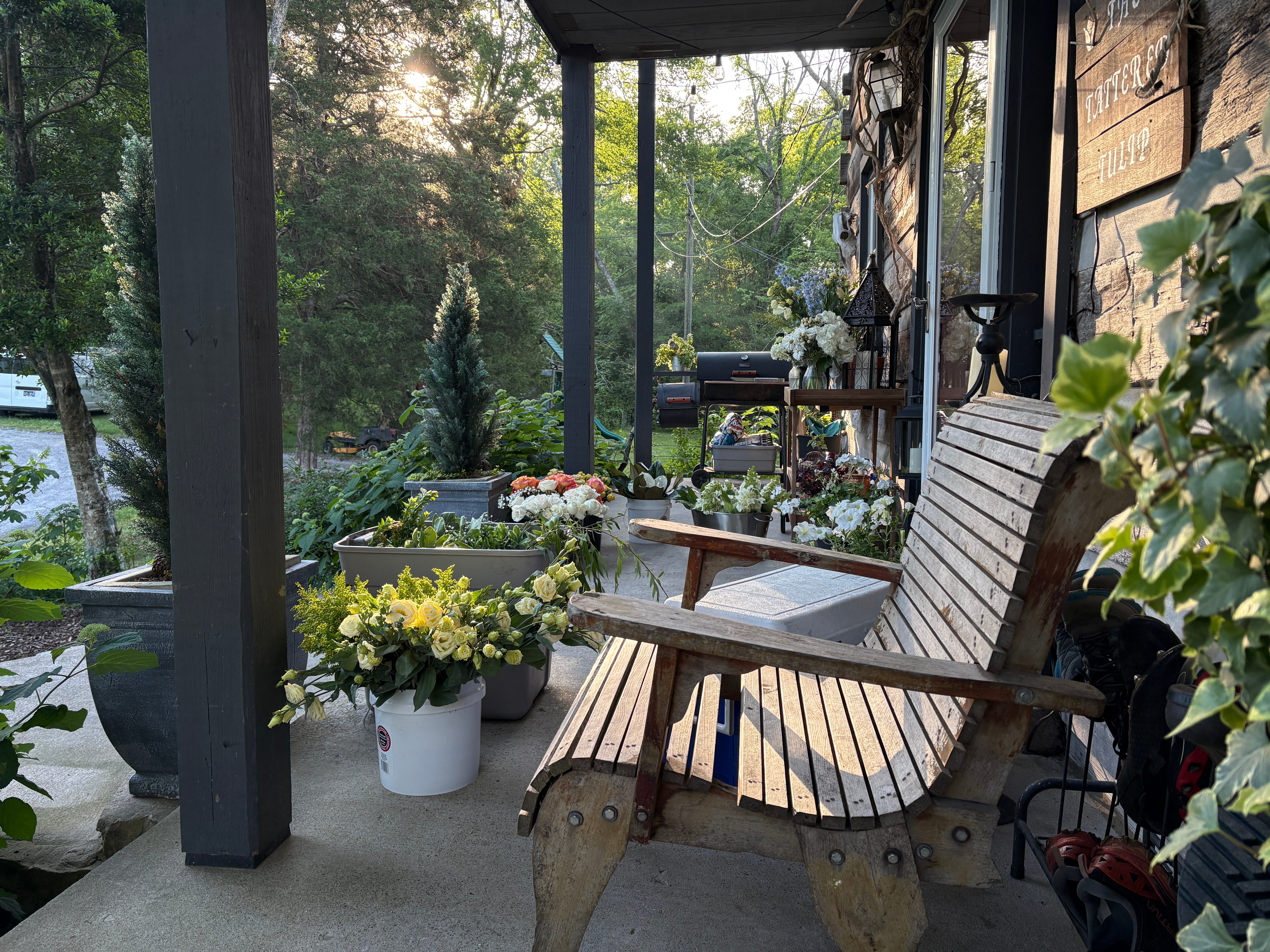
To Get Away From it All
Becky and I sat with our friend Wendy on her porch strewn with flowers from a wedding she had festooned the day before: An outdoor ceremony at a lovely agricultural park followed by a sweet, Tennessee reception at an historic home in Brentwood.
It was hard to beat. It’s also tough to b beat what her city government considers inevitable “progress.”
Wendy and Kevin bought their several acre property southeast of Nashville to be a quiet retreat for their six children and the many guests they anticipated would come.
They’ve delivered on that dream for fifteen years: Hosting tenants, strays, and numerous discussions over lots of food through their outreach called Friends of L’Abri Nashville.
In other words, they moved to the country for many good reasons and not just “to get away from it all,” namely other people.
Their log home reminds us of the Wesley House, if you’re familiar with the Harry Potter books and films. The grounds are quiet, secluded, and a refreshing respite from the frenetic, albeit fun, party some call Nashvegas.
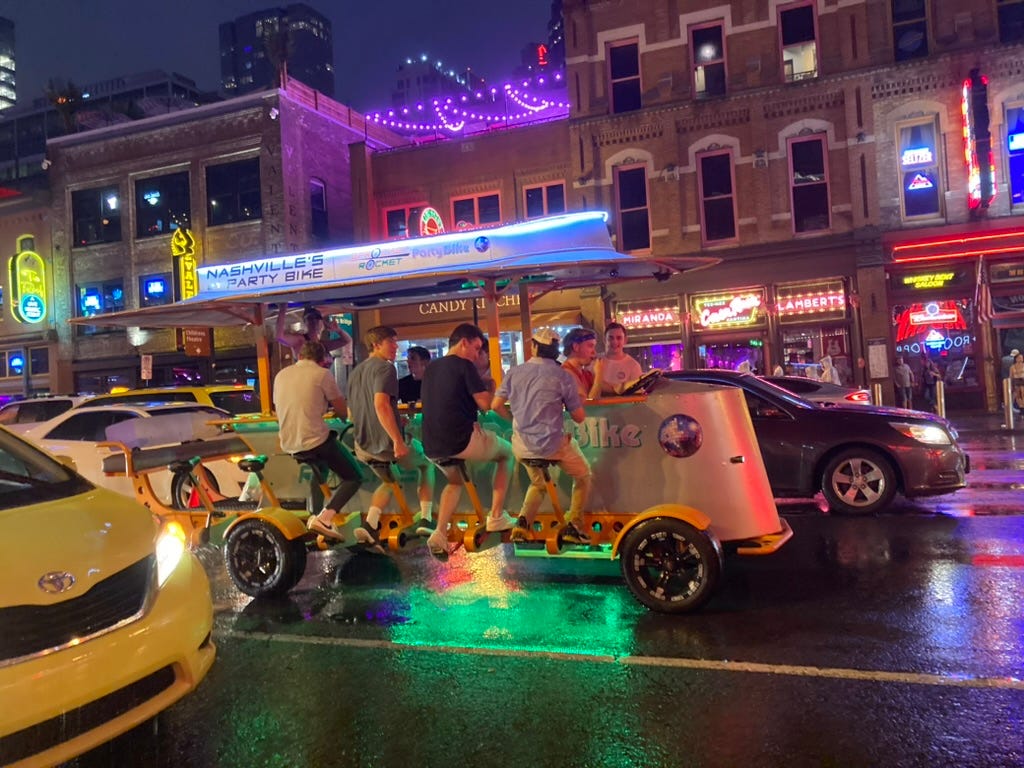
Their retreat, though, is under siege. I should’ve known.
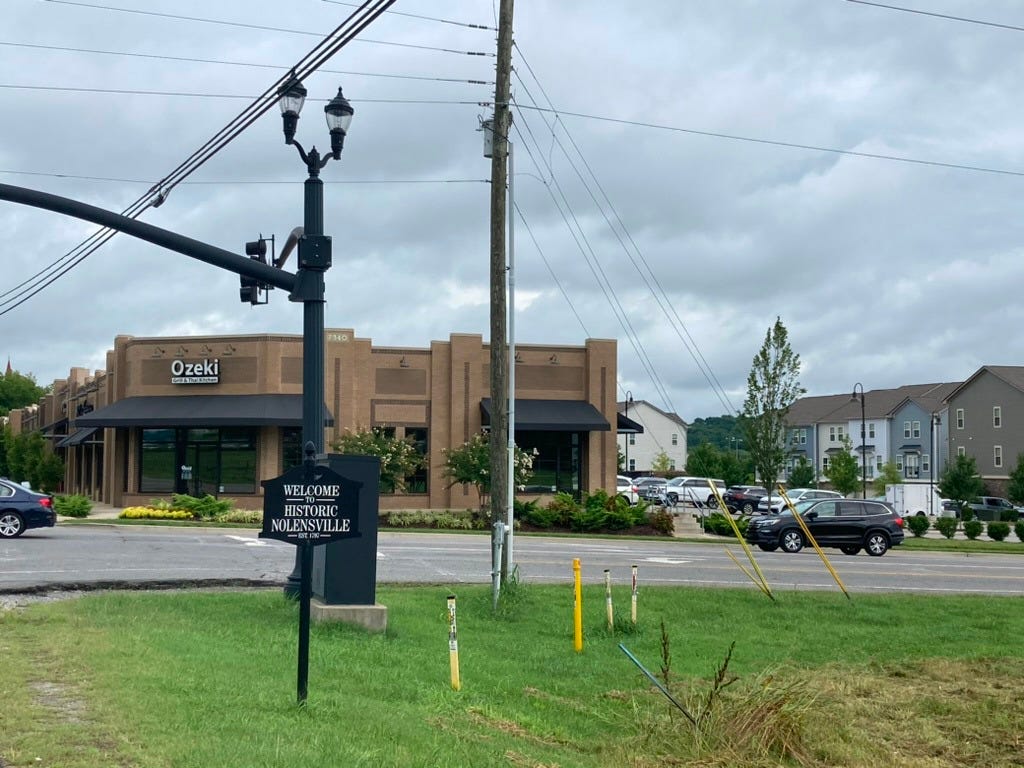
I took a walk one morning down their lane and onto the two-lane pike. At a crossroads within yelling distance from their house I encountered sidewalks and a new development of town homes that simply weren’t there four years previous when I gave a lecture in their living room on automobiles.1
I recall at that time the incessant ratta-tat-tat-TRUM of rock splitting machinery in the distance. Davidson County is all rock. If you wanna build you gotta blast your way down.
On the opposite corner of this development2 sits one of those bucolic lots which privileged families bought in the mid 20th Century to, you know, get away…in order to raise horses or simply have the country views to themselves.
I noticed the parcel didn’t seem lived in. I found out why when Kevin showed me this map on his phone.
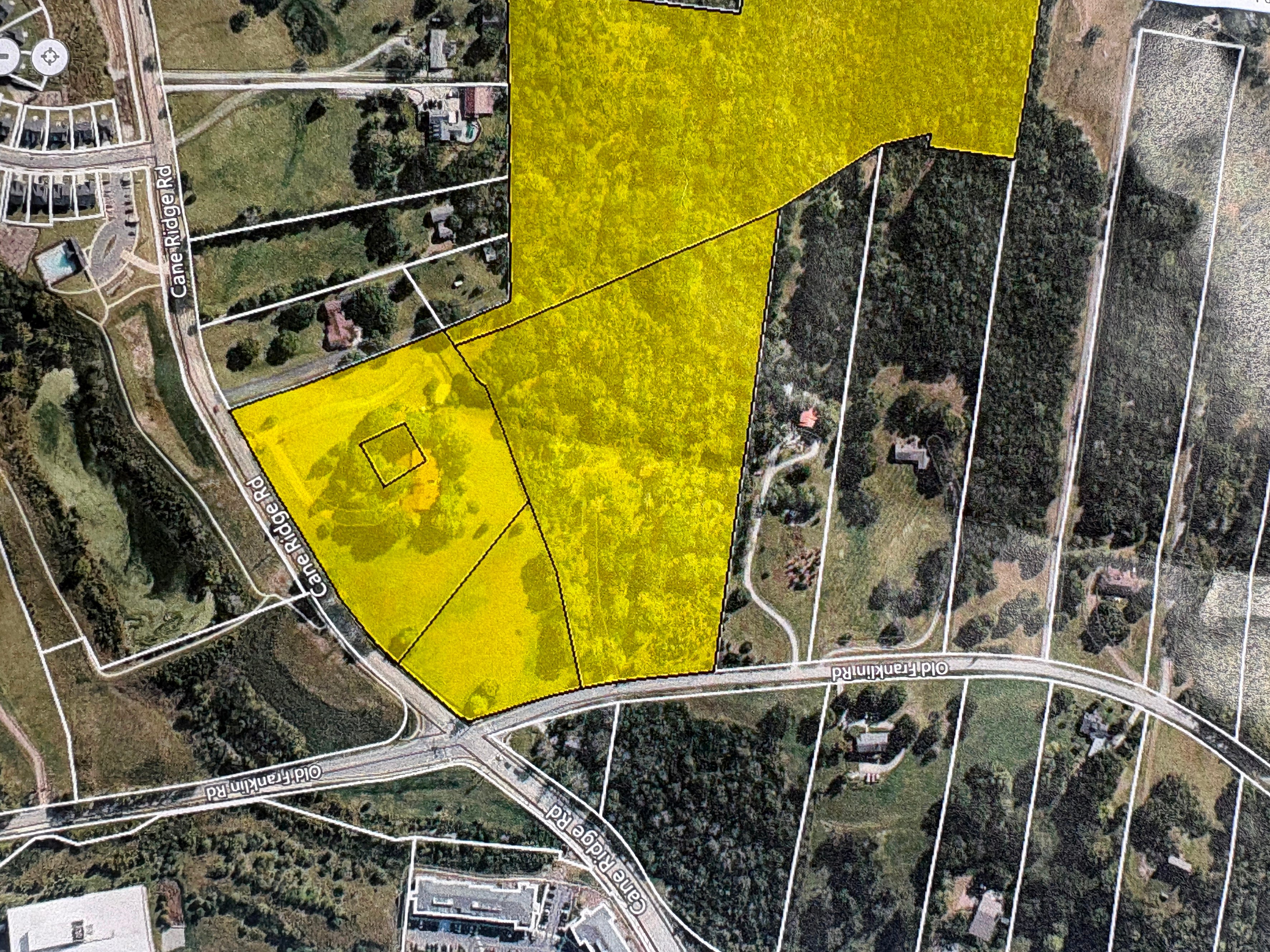
Notice:
Center: Keven and Wendy’s property with the long and winding driveway;
Yellow: The planned sub-division bringing a row of homes within 15’ of their property (They’re lobbying for a much greater setback and/or a fence);
Top and bottom left: The newly built residences that Nashville and builders have already constructed.
A Time for Anger, Lament, and Wisdom
Putting aside our friends’ rightful anger at the city council for withholding these plans until late in the game, and forgetting for a moment the limbo they find themselves in regarding their family’s call to hospitality, and letting go of the looming years of another round of distressing mortar blasts, one fact remains:
This sort of built environment may seem inevitable, but it ain’t.
We can still build or extend human scale towns if we chose to. Instead, we drop what is essentially prefab “communities” onto lots far from our towns’ cores. Why?
Because our car-dependent infrastructure makes it possible for Americans to chase the elusive dream of seclusion, pushing us farther from human scale environments.
And local governments and developers are more than happy to oblige. They get enormous short-term gains from what is arguably a horrible bet on future economic growth and adaptability.3
By law and design, your options for activities in these new developments are root bound: You can stay near your house (work, sleep, watch TV, etc.), walk on the sculpted sidewalks to a few businesses (if you’re lucky) ,4 or drive somewhere to do just about anything else.
Please: Don’t Hear What I’m Not Saying
That it’s somehow unrighteous to long for open spaces and nature.5
That people who are part of suburban sprawl are intentionally devising the downfall of our civic life.
That living in a “thicker” place like a town or a city will make you a better person.
That country living can’t be as vibrant and uplifting as town life.
So, what am I saying?
That the quest to capture a slice of the American Dream is less elusive when we embrace places with more humanity, not less.
Let me demonstrate with a brief memoir I wrote last August. It’s not an argument for town life, per say; It’s more of a vibe I want you to feel.
Someplace That Wants You
Becky and I flew to Denver for a week to help or third daughter and her family upon the birth of Valerie.
This is what happened:
A 20something couple plus a friend slept overnight in shifts in our master suite. They had ample space for reading, working, cooking, and entertaining friends.
This gaggle of friends loved on our dog Rue who gave out vibes of affection and hairy comforts. They sent us a photo of an unnamed GenZ guy playing tug-of-rope with the dog.
Greg and Trella from next door checked in on Rue when a gap in care emerged.
Meals were made in our kitchen, evidenced by a few leftovers in our fridge. Washing up happened too. (We screen our house sitters!).
Our daughter Eliza from Philly stopped in while in town for a kayaking outing with Terilyn who lives eight doors up from us on College Avenue and is the wife of our pastor.
Numerous visitors to The North Museum, Buchanan Park, F&M College, and WestArt (venue) strolled along College Avenue. Joggers circled the city block.
Our third floor tenant came and went to work each day as was his custom, and an Airbnb guest spent one night on our second floor without a hitch.
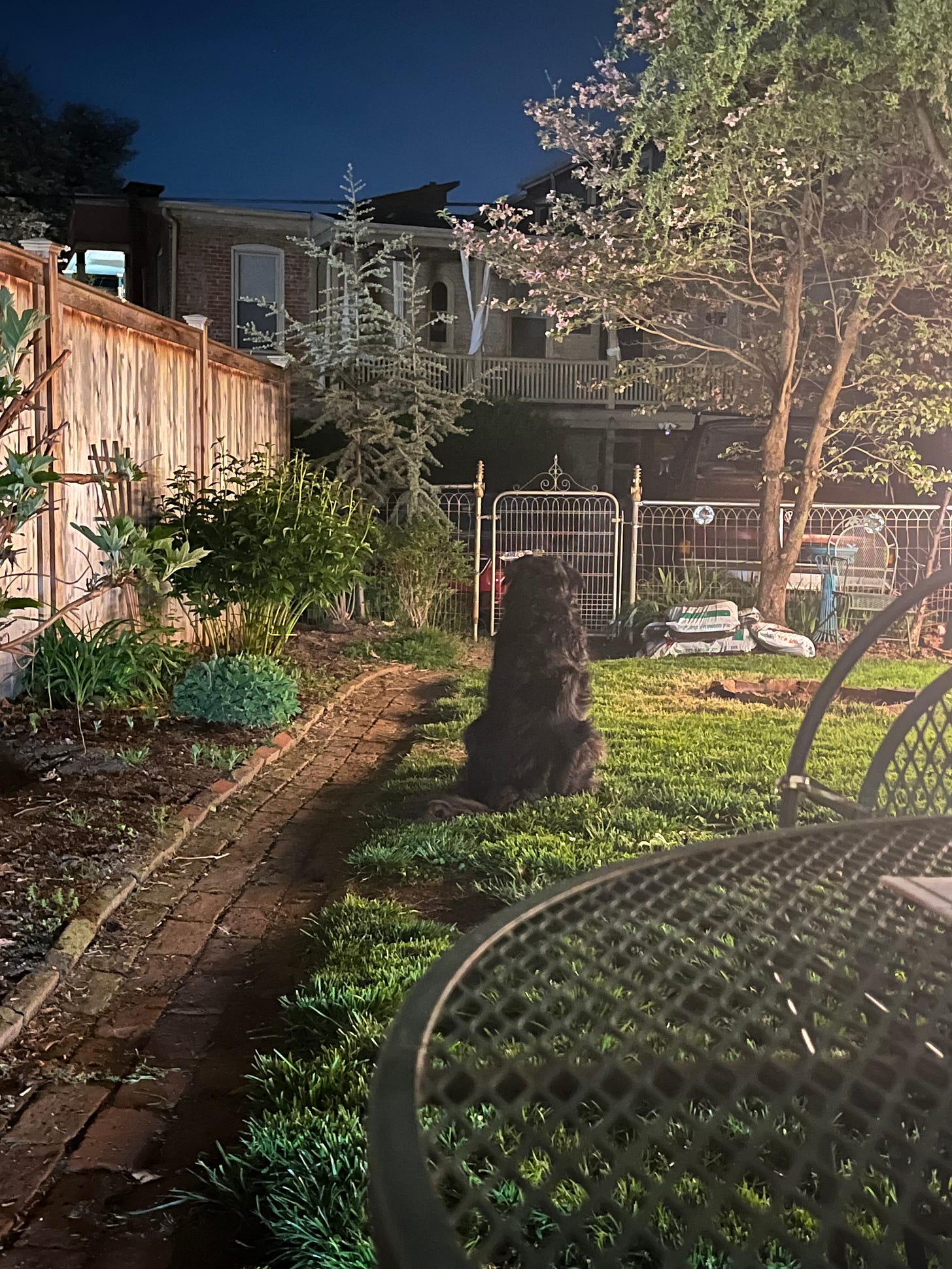
“Tom & Becky Said They’d Be Home Soon.”
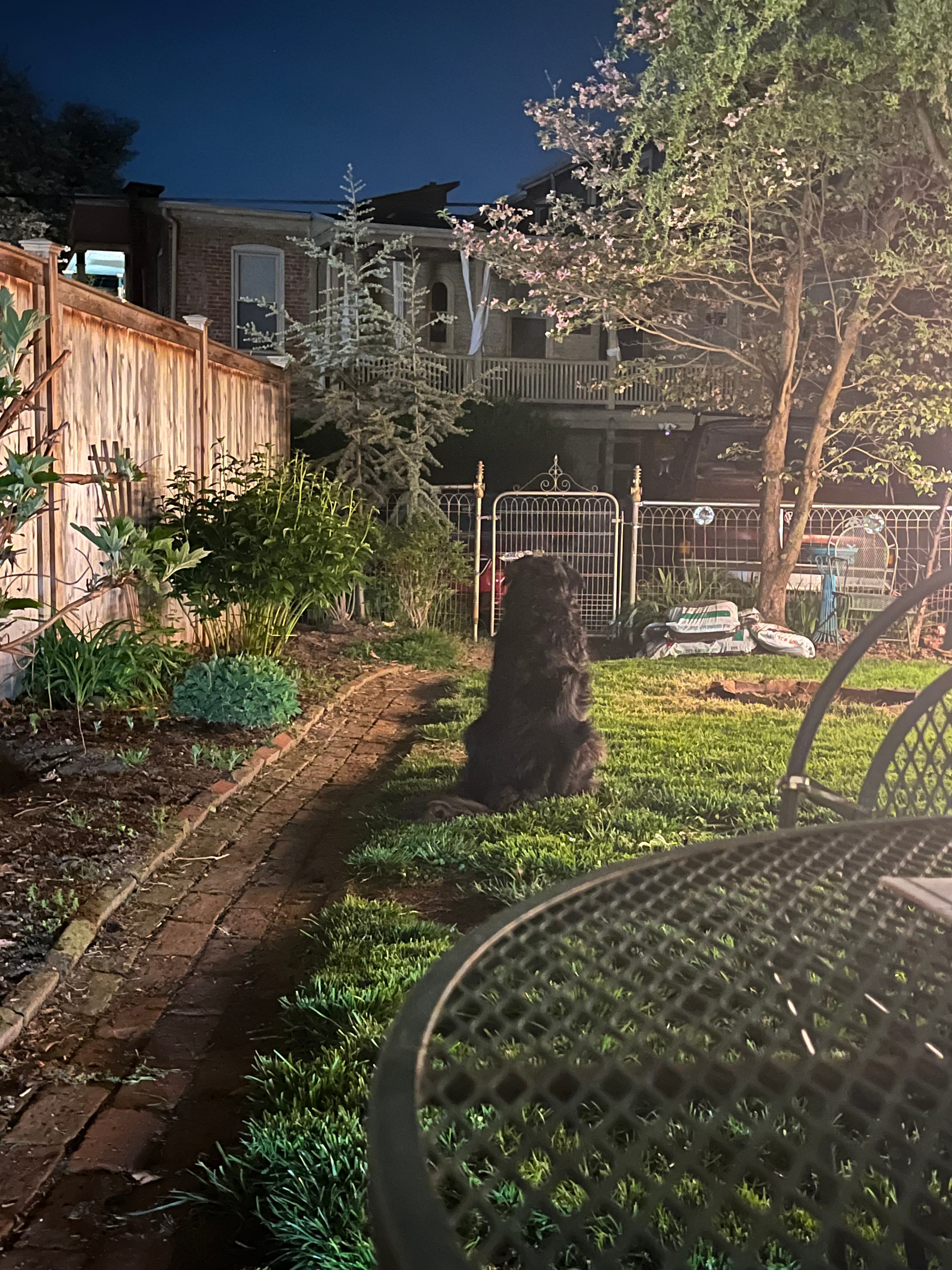
This is what we found upon our arrival from the Philly airport:
Our home was in wonderful condition, and Rue was eager to have the Team back. She made this known by whirling, barking, and batting her front paws at us.
Mail and packages were stacked neatly on the dining room table.
A few items of food and belongings remained on the first floor, but nothing excessive.
Eliza had left a pair of sandals.
This is what happened the next day:
Becky and I continued unpacking, laundering, and tending to our plants.
After dinner we walked to Splits ‘n Giggles for ice cream, five blocks down Lemon St. The shop is owned by Dave, a fellow cyclist, who often waves at me as I ride by his window which faces Cabalar, a trendy and well-populated butchery and burger joint. On weekends, that corner is crawling with happy people.
While in line for dessert we watched a pack of F&M Freshmen girls snap photos as they waited for their orders.
We met a patient and classy mom in line along with her autistic son who was very talkative, affectionate, and apparently excited about ice cream.
Lemon Street neighbor Ben and his three kids came across the street. I had attended his twins’ first birthday party and was surprised to see they were already three years old! Ben can walk to his office from home. Ben’s wife once told me she was very skeptical about living in town, but she’s been won over by the vibrancy and convenience of Lancaster’s West End.
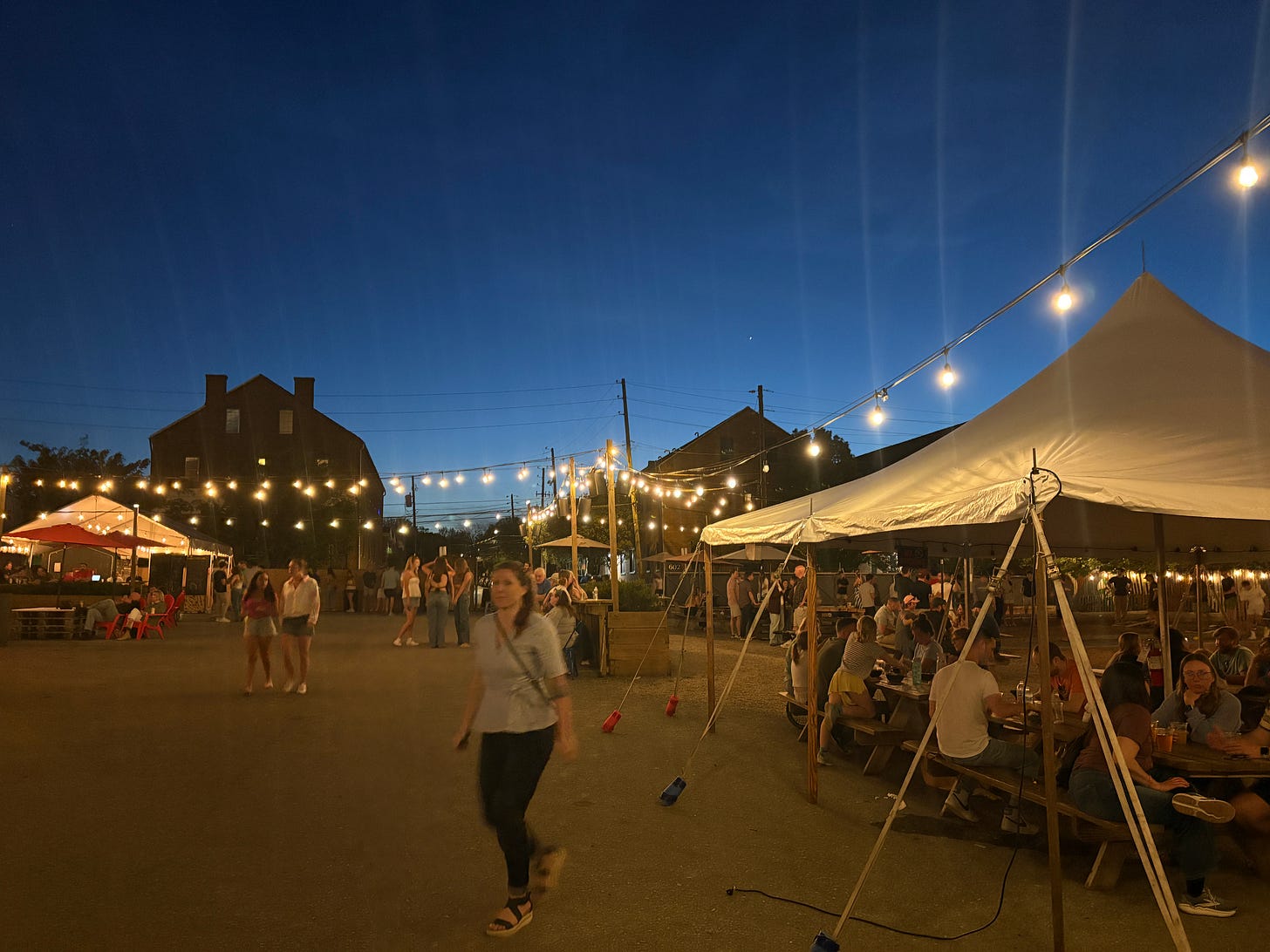
Beer Garden near F&M Campus and Warehouse District (four blocks away)
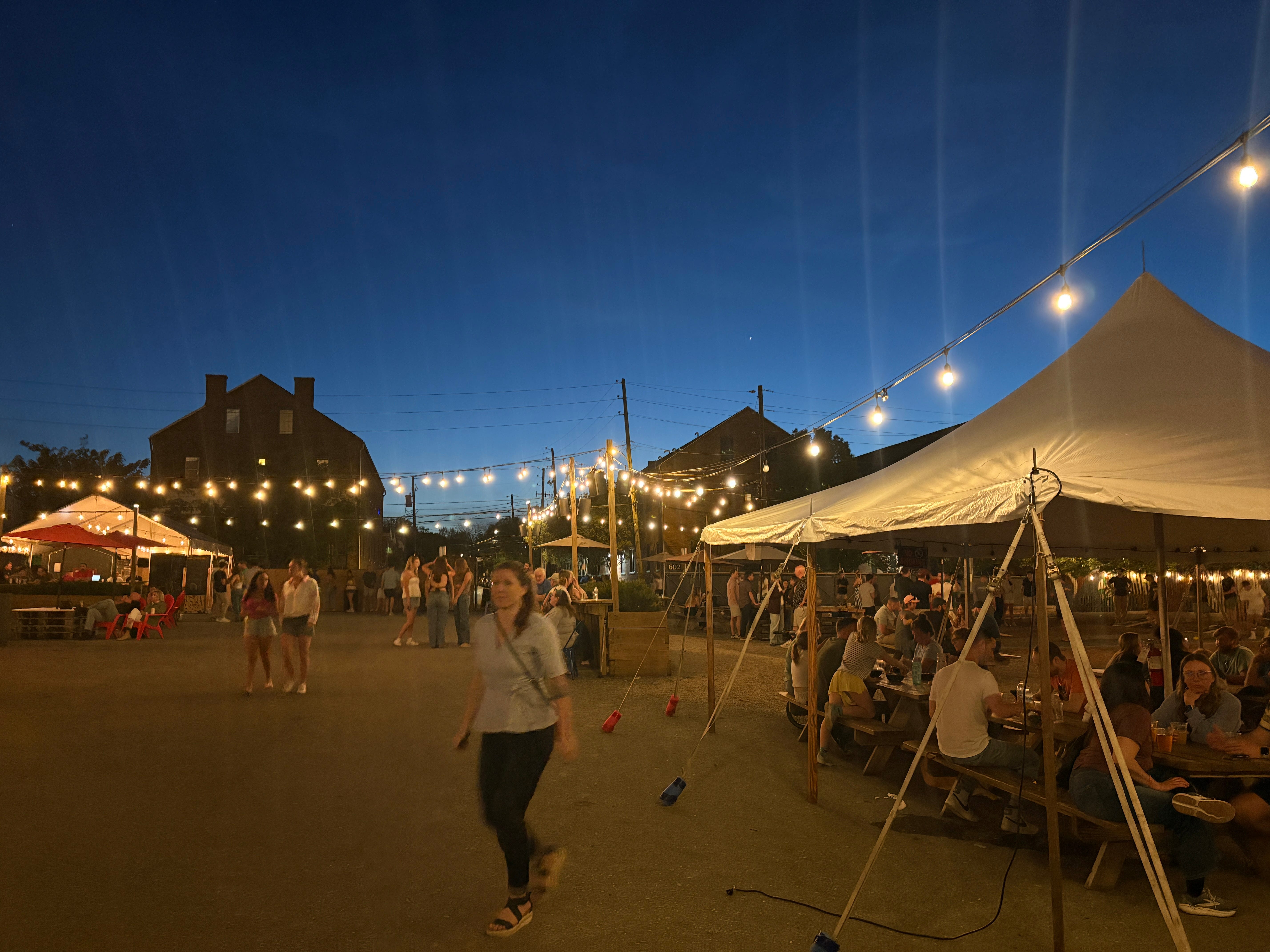
No One Can Have it All, But Some Get a Lot
Most of the activity we observed upon landing back in our neighborhood simply could not take place in a shiny new planned community such as is being built on the fringes of Nashville.
The diversity, intimacy, and serendipity of a human-scaled place is an under story of The American Dream we would do well to consider and recover.
I feel for my Tennessee friends. They love “life on life” with others. They moved out to draw others in. And now, what do they do next? They could stay (embrace the change), move further out (could be elusive), or find a “thicker” place that’s more amendable to building community.
Becky and I increasingly feel very blessed to enjoy an already “thick” place. And the best part is, there’s no fear of people moving in or buildings going up. They’re already here.


Ironically, I spoke on “What is a Car?” It was a cultural and theological look at something we rarely think about or discuss but has huge implications for how we structure our lives.
Development carries a lot of meaning. Since WWII America has gone in for designing, building, and selling fully developed communities. These environs have not evolved over time as our historic towns and cities have, going from basics to complexities over generations, ever adapting to its lands and economies. In fact, if you grew up in a sub-division (a more calculated and less endearing term), you know that change simply doesn’t happen in such a built environment. It’s unlawful. Developments create a self-stagnating financial situation with tons of infrastructure and no possibility for dynamism. It’s just a tight fitting suit with no wiggle room.
See Escaping the Housing Trap: The Strong Towns Response to the Housing Crisis by Charles L. Marohn Jr. and Daniel Herriges.
This sidewalk goes around a retaining pond marked loudly and often with “No Public Access” signs. I didn’t walk there. It felt like a gated community, and to be honest, my brush with nature would’ve felt like a Value Meal at McDonald’s anyway. In the same vicinity is a proper nature trail with no such signs and lovely creek side views.
No way. I love the streams, forests, and small farms throughout Pennsylvania as much as anyone, and I understand why people chose to live in pastoral settings.
Beautiful words about such a brutal situation!